development

Introducing Harmony Meta: A Simpler Way to Discover Research Metadata

Introducing Harmony Meta: A Simpler Way to Discover Research Metadata

Introducing Harmony Meta: A Simpler Way to Discover Research Metadata

Finding the right data is the foundation of good research, but it shouldn’t be the hardest part of the process. We are pleased to announce the beta release of Harmony Meta, a search tool built to help researchers find datasets and study information more efficiently. This first version is now live, and we are inviting the research community to test it and help us shape its future.

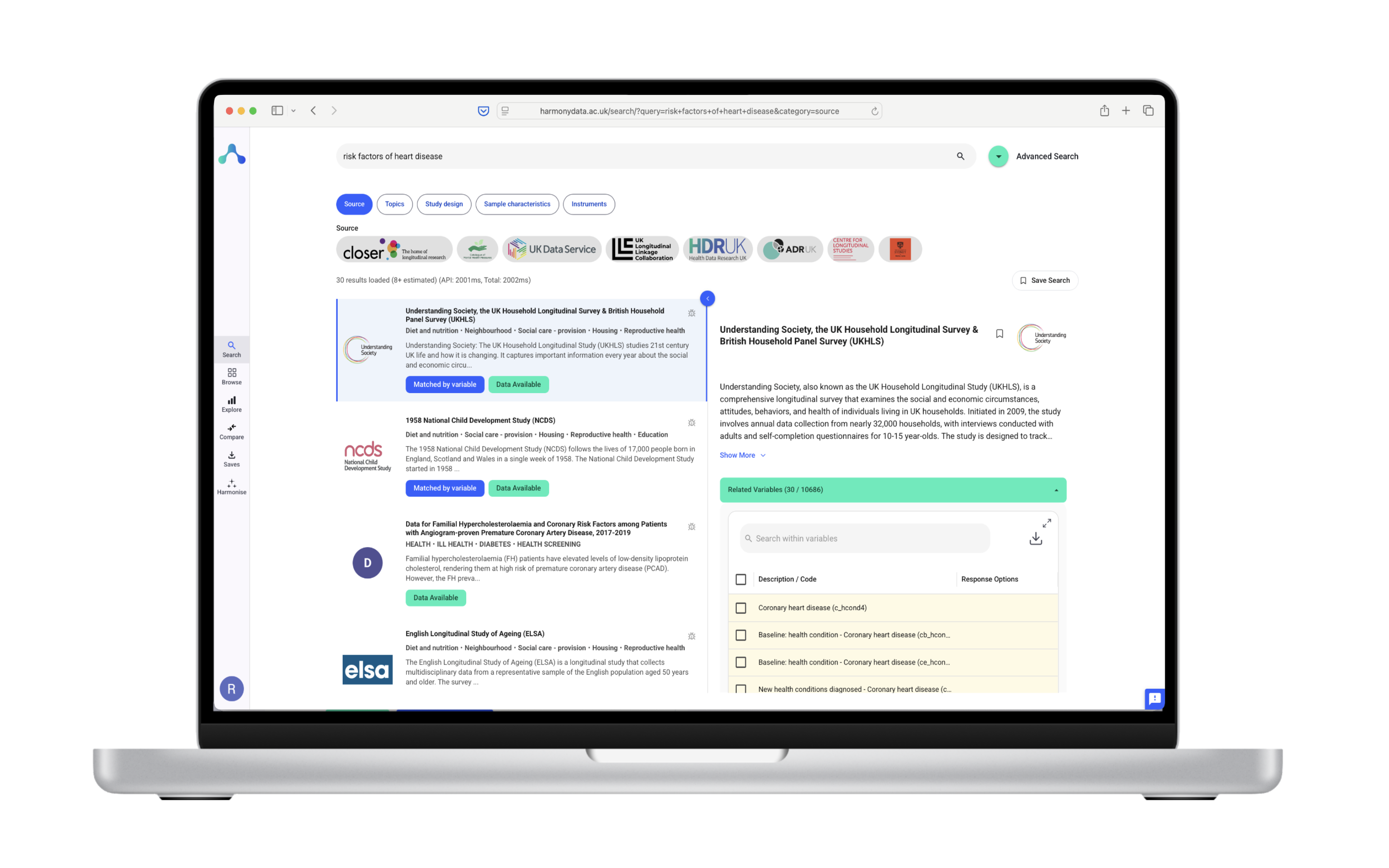
What is Harmony Meta? Harmony Meta is a single point of access for finding information about research datasets, studies, and individual variables. Rather than logging into multiple different archives or repositories, you can use Harmony Meta to search across a growing network of sources—including UKDS, CLS, CLOSER, and the UKLLC—all at once. It’s designed to bring the data to you, rather than making you go looking for it across the web.

Why use it? Tracking down specific metadata often takes more time than it should. Harmony Meta streamlines this process by providing a detailed overview of studies from multiple sources, all on one page. Whether you are looking for long-term longitudinal studies or specific survey questions, our platform helps you see what is available across the UK’s data landscape without the need for repetitive, manual searching on different sites.

Key Features

  • Search across multiple sources: Find studies and datasets from several major providers through one simple interface.
  • Search using everyday language: You don’t need to get the keywords exactly right. You can type queries using the descriptive terms that make sense for your project.
  • Find related concepts: The tool is smart enough to find related terms. For example, a search for “asthma” will also find relevant variables like “difficulty breathing” or “respiratory health.”
  • Variable List: Easily find matching questions and variables within studies without the need to download and trawl through multiple data dictionaries.
  • Clear information: Get direct links to the original data sources along with the descriptions you need to decide if the data fits your research.

Why we need your help Harmony Meta is a work in progress. We are sharing this beta version now because we want to build it alongside the people who will actually use it. Your feedback at this stage is an important factor in how the tool evolves. By testing the beta, you can help us improve the search accuracy, suggest future features and tell us which new data sources we should add next.

Get involved You can try Harmony Meta now at https://harmonydata.ac.uk/search/.

We’d love to hear your thoughts. To help us build a better tool for the community, you can send us feedback here.
Related Posts

Improving Harmony's PDF extraction with user testing

Improving Harmony's PDF extraction with user testing

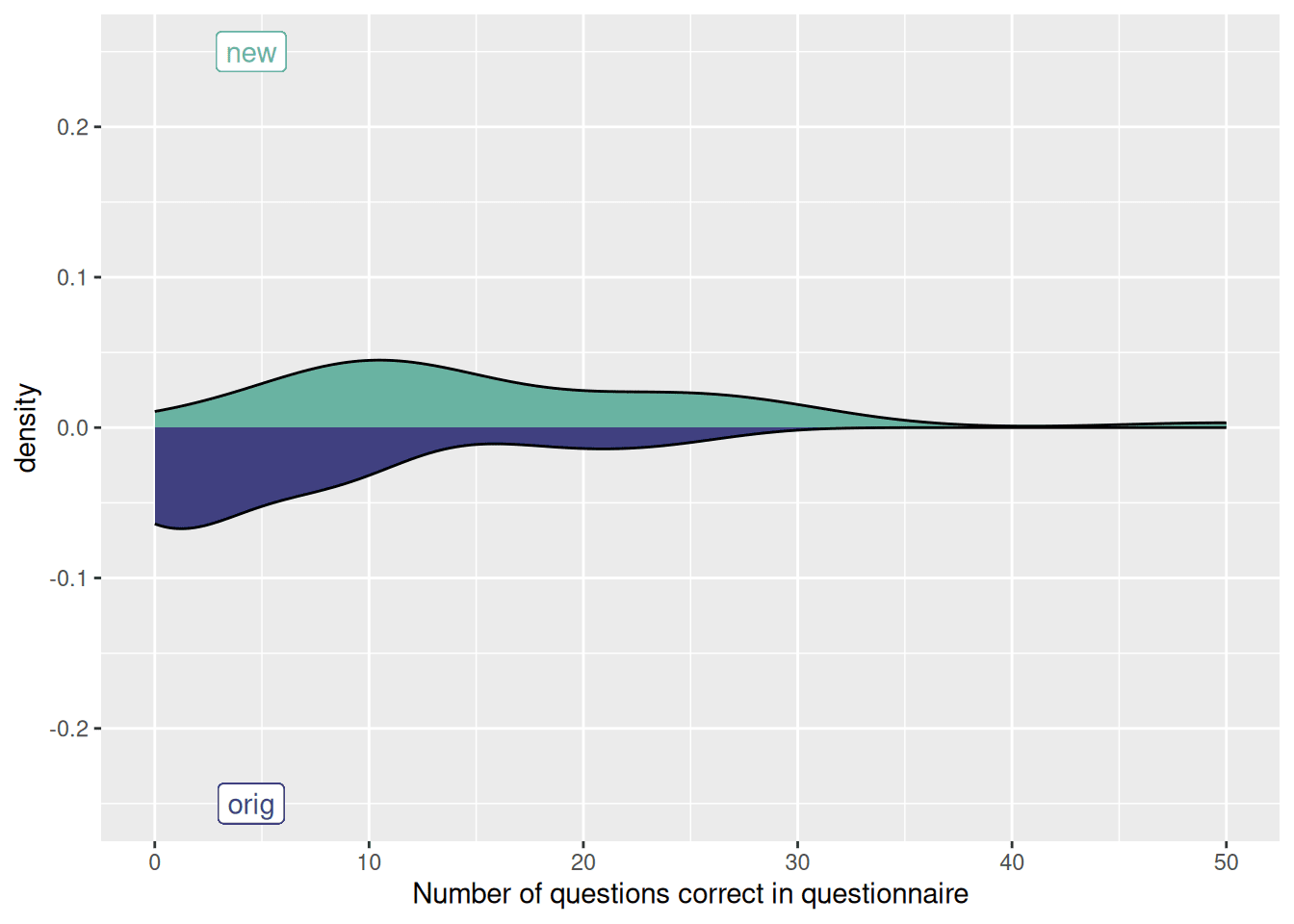
Since we built Harmony, a common complaint has been that it frequently identifies the wrong questions in PDFs. The original algorithm for finding questions in PDFs was a mixture of rule based heuristics and some hand coded logic to look for e.g. lines in the document which begin with numbers. This was very fragile and worked fine on short questionnaires such as the GAD-7, but failed on larger documents. We decided to run a competition with our partner DOXA AI where members of the public could train their own model to extract questions from PDFs.
Harmony at MQ and DataMind Data Science Workshop

Harmony at MQ and DataMind Data Science Workshop

Harmony at MQ and Datamind Data Science workshop On 2 May 2025, Dr Eoin McElroy demonstrated Harmony at the MQ and Datamind Data Science workshop in Deutsche Bank. Eoin’s presentation focused on “Maximising the use of existing survey data: facilitating cross-study research using retrospective harmonization.” The workshop brought together researchers interested in applying novel harmonisation techniques to existing datasets. Eoin explained traditional harmonisation processes and presented a user-friendly guide to the Harmony tool, demonstrating how natural language processing can streamline the harmonisation process.

Signup to our newsletter

The latest news on data harmonisation project.

Please select all the ways you would like to hear from Harmony project:

You can unsubscribe at any time by clicking the link in the footer of our emails. For information about our privacy practices, please visit our website. We use Mailchimp as our marketing platform. By clicking below to subscribe, you acknowledge that your information will be transferred to Mailchimp for processing. Learn more about Mailchimp's privacy practices.

